Collections, Canons and 'Pedagogical Eros'

One of the moments that you can date the long death of Modernism in British Pop Culture is in the moment of retrospective canon-forming. This can also be one of the most interesting and seductive elements of what happens afterwards, however. One of the guilty culprits for this is surely the winsome end of post-punk - the Television Personalities with Steed, Geoffrey Ingram and Syd Barrett, The Smiths with their litany of Shelagh Delaney, Radclyffe Hall and John Schlesinger (Michael Bracewell anatomised these particular obsessions brilliantly in England is Mine) leading eventually to Belle and Sebastian assembling a personal canon out of Morrissey's, Lawrence from Felt's, or Dan Treacey's personal canons.

Naturally this extends into Ghost Box, only here it's seemingly Germano Facetti, Alison Smithson and Arthur Machen, which is a significantly more interesting assemblage. This came to mind recently watching for the first time Leontine Sagan's giddily wonderful Madchen in Uniform for the first time and recognising one of the scenes from the label of Cherry Red's ur-indie compilation Pillows and Prayers, which itself ranges round historically in a manner unthinkable to say, The Pop Group: Quentin Crisp monolgues, 60s garage rock, poetry readings in amongst the twitchily white bands on the label itself.

The Public Modernism evoked by K-Punk here is certainly one of the most poignant and pregnant elements of Ghost Box et al, and reminds that the important point about the Radiophonic Workshop was precisely that it was mundane, everyday, and in this it was the Workshop that were the true inheritors - rather than Darmstadt or IRCAM - of the mantle of the 1920s avant-gardes. The real project of the Bauhaus and their allies or of the Constructivists was a radicalised alltagsleben or byt. The forcible destruction of the art gallery not out of petulant nihilism but so that the disjunctively aesthetic can infuse every moment of the most prosaic elements of life, whether it be furniture, crockery, public housing, posters, book covers.

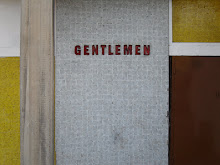
What is especially odd here is the existence of a kind of libidinising pedagogy, the state and its education system being usherers into a world of technocratic wonders, a benign hand to hold in a journey through a jarring modernity. Accordingly, the immediate postwar Modernist achievements were in schools as much as in public housing, such as in the Smithsons' Hunstanton school in these pictures, or the programme of quietly Modernist prefab Primary schools in 1940s Hertfordshire. Incidentally Nonesuch were interesting among record labels for having had this kind of pedagogical attitude to the fremde, so this Woebot collection is pertinent, not only for the fantastic artwork.

A post is on the way soon about Madchen in Uniform's presentation of 'pedagogical eros' but it'll be after I force IT to watch it, as I don't want to leave any spoilers...which are contained in this lengthy piece however.
posted by owen hatherley at 3:45 pm


0 Comments:
Post a Comment
<< Home