Contributions to The Provisional Museum of the British Revolution

O.G.S Crawford was a character, as Jonathan Glancey points out, almost too good to be true. A misanthropic communist antiquarian and cartographer based in Southampton who photographed social housing projects and Constructivist architecture, and who wrote unpublishable books obsequious and bitter (respectively) about the Soviet Union and Britain! I have a forbear! I was kindly given Bloody Old Britain, Kitty Hauser's excellent biography of Crawford for my birthday, and what a brilliant melange it is. Crawford was one of those (H.G) Wellsian figures who seemed to survey human history from a vast distance, as in the aerial photography he specialised in. This is something inaccurately attributed to Marxism, although Hauser quotes Trotsky's disdain for this kind of Olympian perspective, noting Wells' 'roaming far and wide over the history of a few millennia with the carefree air of a man taking his Sunday stroll.' Clearly, politically Crawford was a typical 1930s brit-bourgeois fellow-traveller of the sort Trotsky himself excoriates in The Revolution Betrayed - but one of the consequences of his trip to the USSR is a methodology which could easily be extricated from his cushy Stalinism.

Last year, I went to an exhibition in Berlin on 'Alltagsleben' in the late, unlamented German Democratic Republic. Looking at the collection of police uniforms, gramophone records, scouting outfits and plastic consumer goods, all of which were given commentary that erroneously claimed they were unique, we realised that exactly the same approach could be made towards documenting the everyday in late 20th/early 21st century Britain. A vitrine filled with pepper spray, tasers and truncheons, perhaps, or another with copies of Nuts and Zoo, while Blair's 'people's princess' speech and a collection of flowers and dedications left in front of Buckingham Palace could get a special Diana room to themselves. Crawford had a similar impulse, Hauser surmises, on visiting the various Museums of the Revolution in the USSR, then in the throes of the brief period of kulturkampf sometimes called the Soviet Cultural Revolution. After returning in 1932 from his junket, Crawford began to obsessively photograph British ephemera and (sub)urban scenes, as if they were to be put before a future tribunal of history, or to serve as exhibits in the Museum of Pre-Revolutionary Britain.

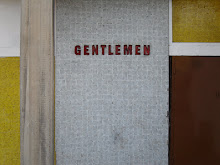
Bloody Old Britain is filled with his cold, elegant and haunting Neue Sachlichkeit photographs of Southampton. Advertising hoardings ('Militarism, Beer' runs one of Crawford's captions), ribbon developments, a church in Shirley that promises knowledge of 'HELL - its locality and use'. He also photographed the sub-garden city council estate where I did much of my growing up, with the same meticulousness that he recorded the image of Ernst May's Neue Frankfurt. Hauser claims this wasn't just an idle hobby, but the fragments of a grandiose project of archaeology-in-advance, one comparable with Mass-Observation in its scope and anthropological bent, the sort of approach that people find 'elitist' and 'patronising' because they don't like to believe that their choices are not 'authentic', or their circumstances contingent and their prejudices conditional. You can see, in these photographs, a delineation of 1930s laissez-faire capitalist Britain as something that could and would be historically superseded, and something which, in its customs, irrational beliefs and fetish objects was every bit as deluded, ridiculous and fascinating as any 'primitive' civilisation.

What happens to these photographs after November 1940, when Southampton is all but flattened and much of Crawford's archives incinerated, is quietly chilling. The belief in the socialist future is gone, but the cold eye and fixation on detail remains. In one, a charred church facade stands in front of a void. An earlier photograph shows the rubble of a demolished Armenian church next to Soviet communal flats, with the implication that the ruin was giving way to a new, saner world. In the 1940s Crawford realised that this wasn't the case, and the result applies the new objectivity to the usually romantic, chiaroscuro iconography of ruination. Both approaches - the documentation of our present barbarism and the documentation of a possible subsequent one even worse - have unsettling but intriguing implications for pre-revolutionary Britain.

Last year, I went to an exhibition in Berlin on 'Alltagsleben' in the late, unlamented German Democratic Republic. Looking at the collection of police uniforms, gramophone records, scouting outfits and plastic consumer goods, all of which were given commentary that erroneously claimed they were unique, we realised that exactly the same approach could be made towards documenting the everyday in late 20th/early 21st century Britain. A vitrine filled with pepper spray, tasers and truncheons, perhaps, or another with copies of Nuts and Zoo, while Blair's 'people's princess' speech and a collection of flowers and dedications left in front of Buckingham Palace could get a special Diana room to themselves. Crawford had a similar impulse, Hauser surmises, on visiting the various Museums of the Revolution in the USSR, then in the throes of the brief period of kulturkampf sometimes called the Soviet Cultural Revolution. After returning in 1932 from his junket, Crawford began to obsessively photograph British ephemera and (sub)urban scenes, as if they were to be put before a future tribunal of history, or to serve as exhibits in the Museum of Pre-Revolutionary Britain.

Bloody Old Britain is filled with his cold, elegant and haunting Neue Sachlichkeit photographs of Southampton. Advertising hoardings ('Militarism, Beer' runs one of Crawford's captions), ribbon developments, a church in Shirley that promises knowledge of 'HELL - its locality and use'. He also photographed the sub-garden city council estate where I did much of my growing up, with the same meticulousness that he recorded the image of Ernst May's Neue Frankfurt. Hauser claims this wasn't just an idle hobby, but the fragments of a grandiose project of archaeology-in-advance, one comparable with Mass-Observation in its scope and anthropological bent, the sort of approach that people find 'elitist' and 'patronising' because they don't like to believe that their choices are not 'authentic', or their circumstances contingent and their prejudices conditional. You can see, in these photographs, a delineation of 1930s laissez-faire capitalist Britain as something that could and would be historically superseded, and something which, in its customs, irrational beliefs and fetish objects was every bit as deluded, ridiculous and fascinating as any 'primitive' civilisation.

What happens to these photographs after November 1940, when Southampton is all but flattened and much of Crawford's archives incinerated, is quietly chilling. The belief in the socialist future is gone, but the cold eye and fixation on detail remains. In one, a charred church facade stands in front of a void. An earlier photograph shows the rubble of a demolished Armenian church next to Soviet communal flats, with the implication that the ruin was giving way to a new, saner world. In the 1940s Crawford realised that this wasn't the case, and the result applies the new objectivity to the usually romantic, chiaroscuro iconography of ruination. Both approaches - the documentation of our present barbarism and the documentation of a possible subsequent one even worse - have unsettling but intriguing implications for pre-revolutionary Britain.
posted by owen hatherley at 10:10 pm


0 Comments:
Post a Comment
<< Home